
Workshop Announcement: Carrying Knowledge: Embroidery, Indigenous Memory, and Writing from the Nilgiris
with Toda Artisan Seetha Lakshmi and Ramya Reddy, Coonoor & Co

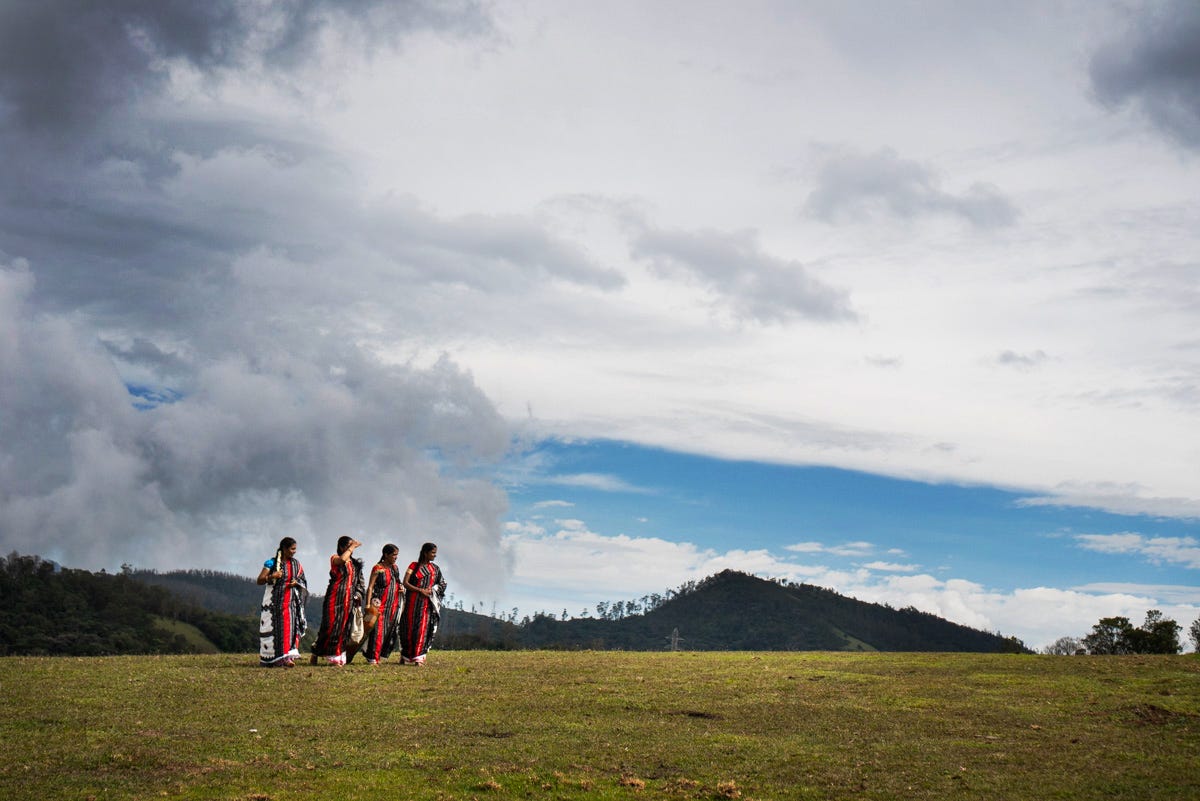
Carrying Knowledge: Embroidery, Indigenous Memory, and Writing from the Nilgiris with Toda Artisan Seetha and Ramya Reddy, Founder of Coonoor & Co.
Dates: Saturday, June 27th 2026 + Saturday, July 4th 2026.
Where: Online, Zoom ( link will be shared with registered participants )
Time: 7 pm IST / 9:30 AM EST
Workshop Languages: Tamil and English
This is a paid workshop, with all proceeds going towards the Toda Artisan community.
Register here


About the workshop:
This two-part online module brings together conversation, lived practice, and reflective writing through the ongoing work between Ramya Reddy and Toda women artisans from the Nilgiris.
Centred around embroidery not merely as craft but as a living system of memory, continuity, labour, and relationship, the sessions explore what it means to work closely with indigenous knowledge in contemporary contexts. Through conversation with senior Toda artisan Seetha, participants will engage with questions around transmission, women’s practices, material intelligence, healing, resistance, and the role of storytelling and documentation in carrying fragile worlds forward.
The second session extends these conversations into a reflective writing and study space, considering how one writes about lived knowledge, inherited practices, and communities with sensitivity, responsibility, and attention.
Some of the questions we are looking to think through at this workshop include:
How is knowledge transmitted across generations? What forms of memory, labour, and relationship are embedded within material traditions? How do women sustain and adapt cultural practices over time?
What does it mean to write responsibly about lived knowledge? When should one document, and when should one simply listen? How can writing remain attentive to complexity, intimacy, and forms of knowledge that exceed explanation?
Through collective discussion and guided reflection, participants will be invited to consider the ethical and creative possibilities of working alongside living traditions.
About the Toda Project at Coonoor & Co*:
With fewer than 1,700 Todas and only around 400 artisans practising this embroidery, the work of preservation cannot be passive.
Ramya explains the beginning of this work :
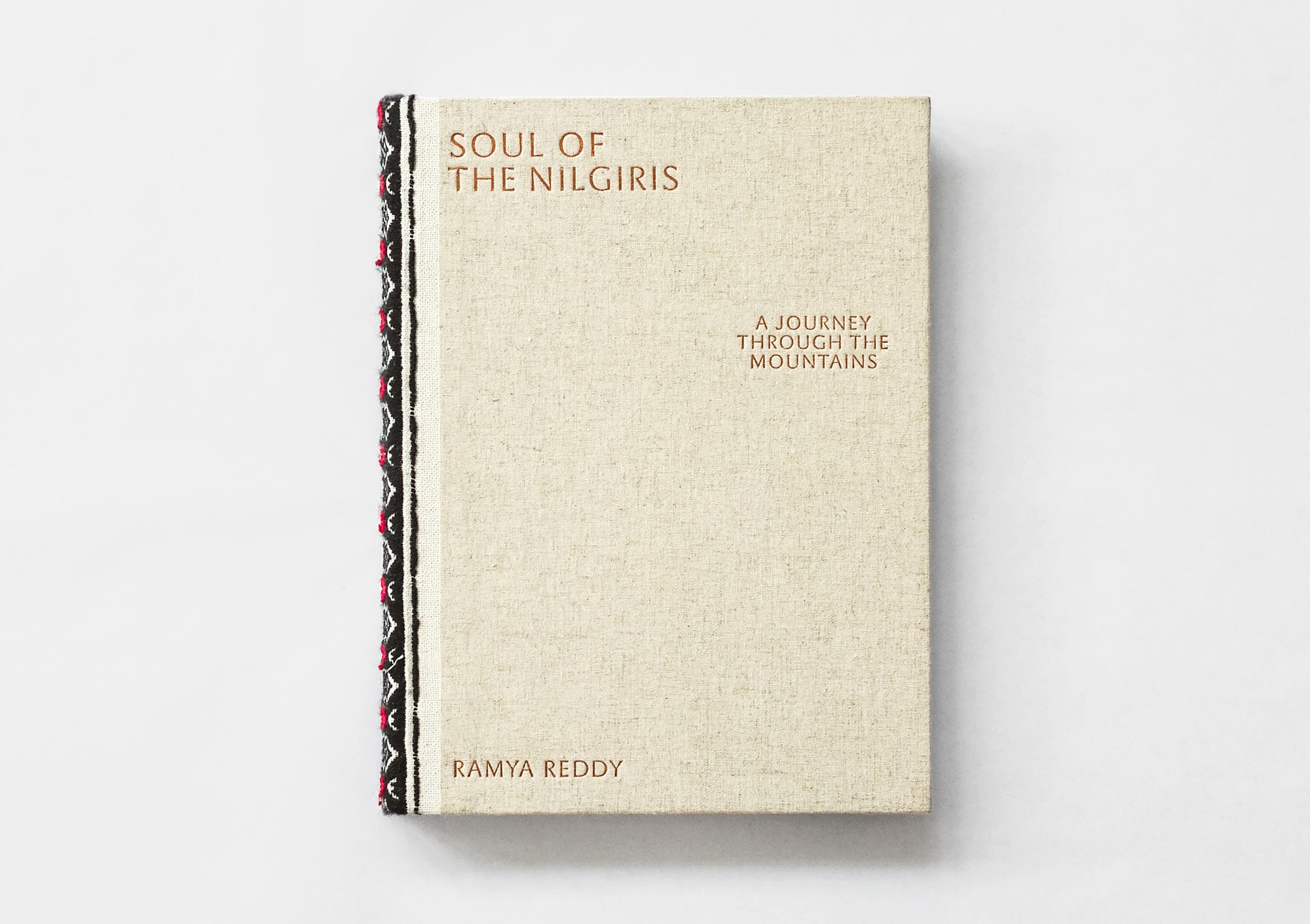
Sometime during the winter of 2016, in the midst of a multi-year writing project about the Nilgiris and the people who live here, the first spark of this project appeared. I was immersed in what would become Soul of the Nilgiris, a book shaped in no small part by the generosity and knowledge of the region’s indigenous communities.


From the beginning, it was important to me that these communities were not simply referenced or represented, but involved—especially in the creative process. Among them, the Toda community held a particular pull. I was drawn to the women’s extraordinary needlework, their quiet mastery of a geometric embroidery form that was as much a language as it was an aesthetic.
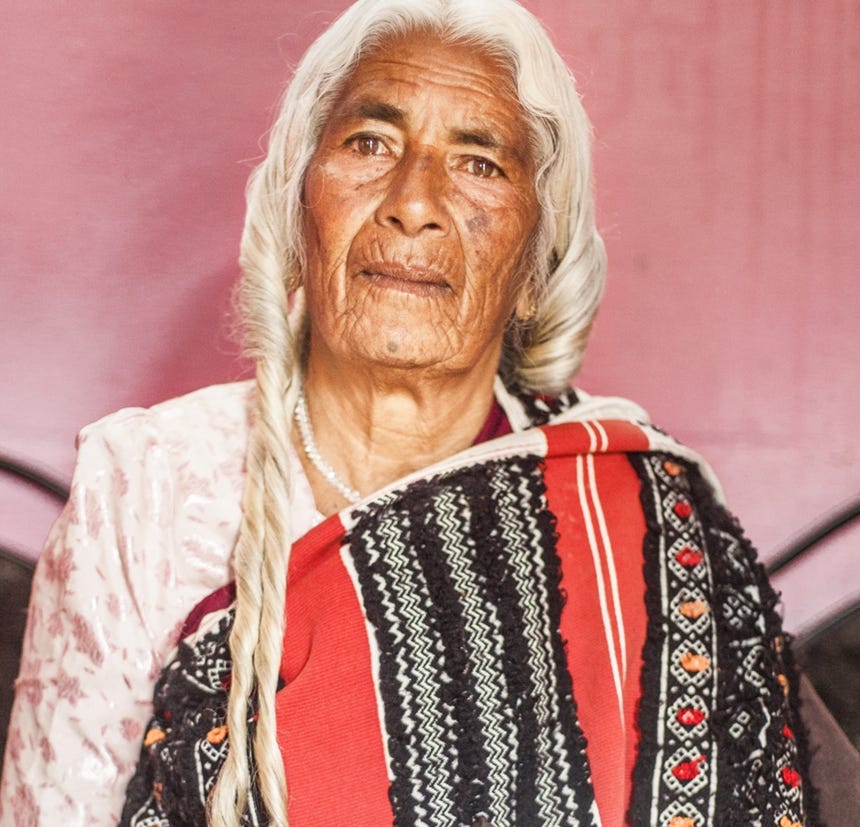
In Memory of Mutsin
This was not preservation for its own sake but a shared decision to look forward.
The decision to use Toda embroidery in Soul of the Nilgiris was not simply an aesthetic one. It marked a shift. It was the first time the women artisans had extended their work beyond the traditional garments and ritual textiles of their community, and into something unfamiliar.
This was made possible by Mutsin.
A woman of remarkable substance and clarity, she believed in the possibility of new futures. Toward the end of her life, I had long, searching conversations with her and her daughter-in-law, Seetha (now the head of our artisan group), about what it might mean to open the form while still protecting its essence. She believed that her community’s art needed to be seen differently and seen again, that its survival would depend not on preservation alone but on the courage to evolve.
Mutsin passed away in October 2019. She didn’t live to see this next chapter unfold, but her vision is everywhere in it. The work we do today, with a growing group of Toda women artisans, remains inseparable from her belief in it.
“…She believed that her community’s art needed to be seen differently, and seen again.”
*Read the entire story here: https://coonoorandco.com/toda-story
About the facilitators:
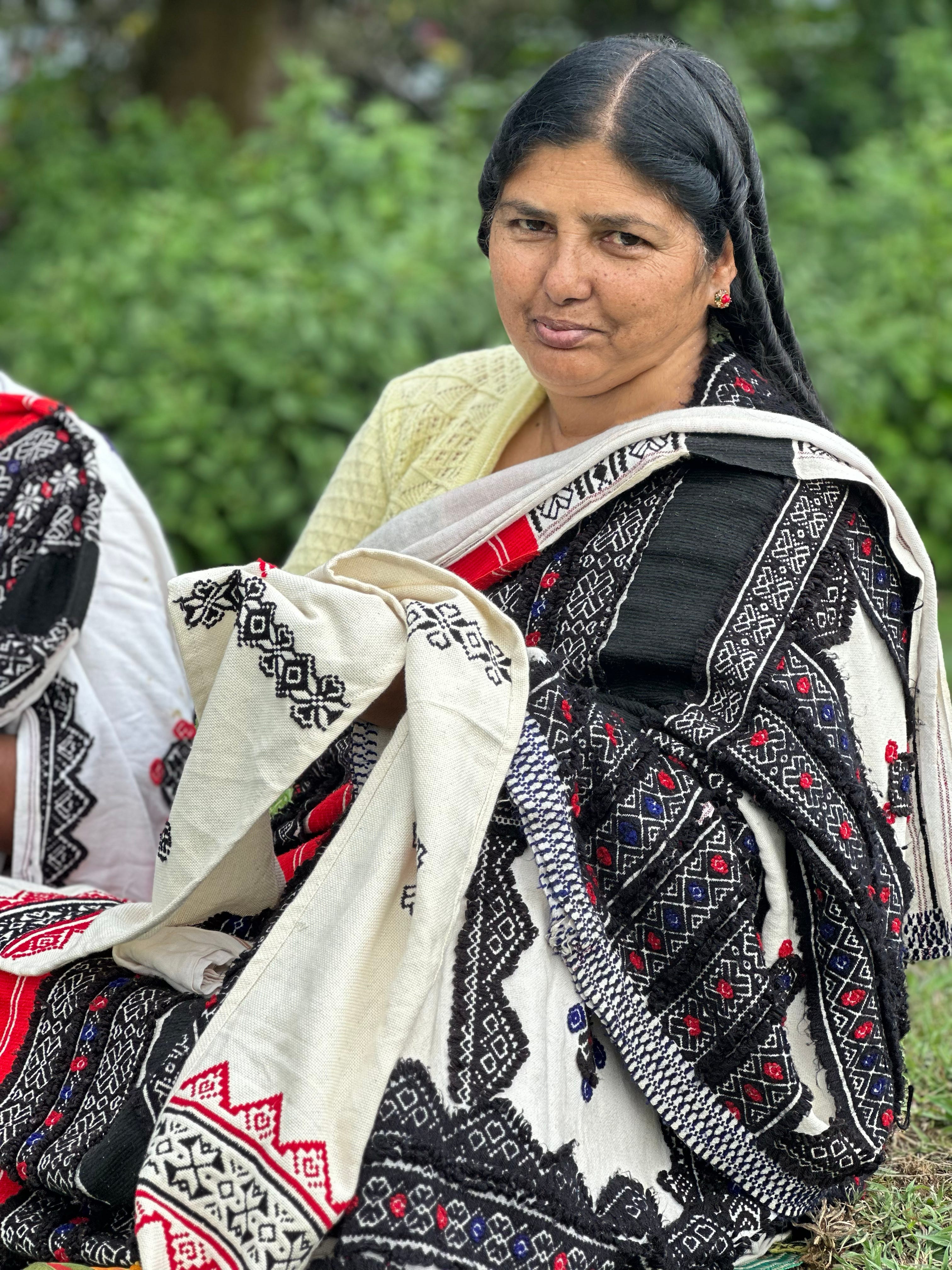
Seetha Lakshmi: For decades, Seetha Lakshmi has helped sustain one of India’s most remarkable textile traditions. Seetha Lakshmi is a Toda Artisan Leader and has been central to Coonoor & Co.’s Toda project from its early stages. She worked closely with founder Ramya Reddy to develop new possibilities for the embroidery tradition while preserving its integrity.
As a senior Toda artist, Seeta Lakshmi carries forward a practice that is learned through their community. Part of a collective of nearly 70 artisans working with Coonoor & Co., their embroidery is created entirely by hand, without guides, sketches or frames. Every motif is counted thread by thread, preserving a visual language that has been carried across generations in the Nilgiri hills.
About Ramya Reddy:
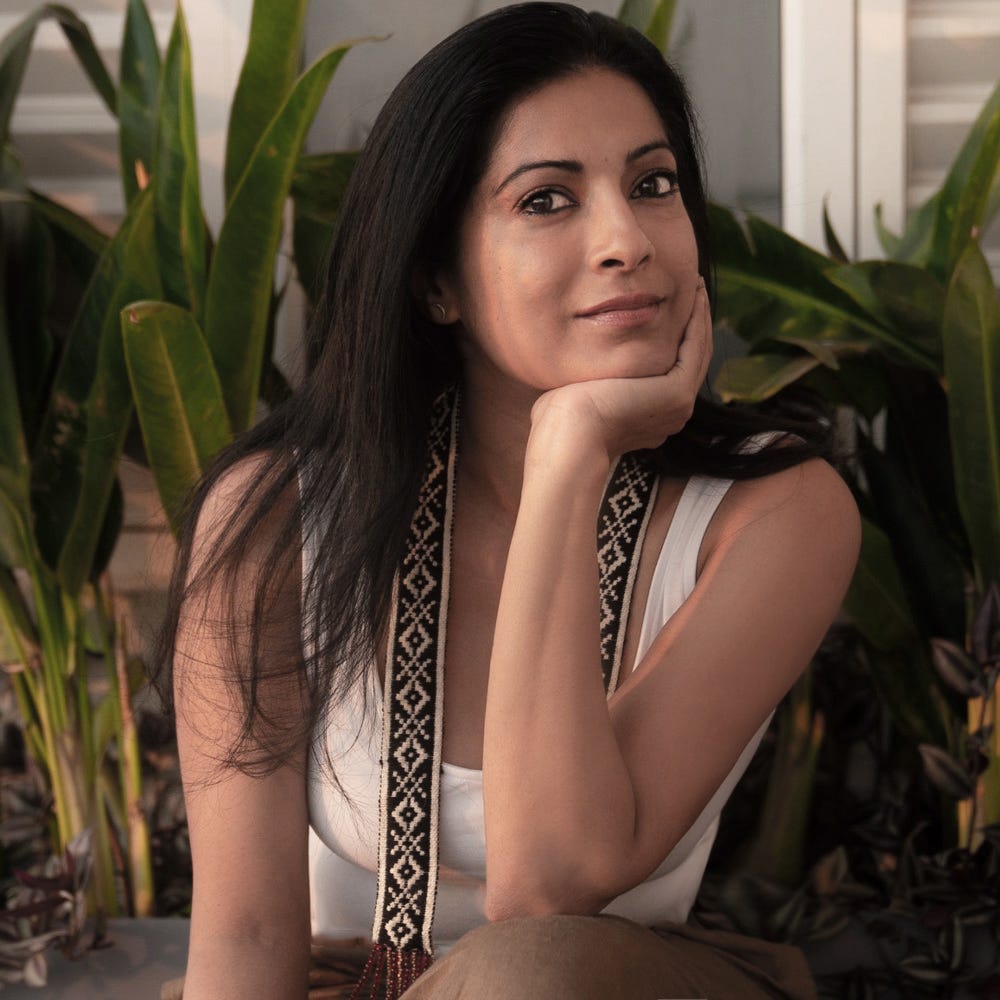
Ramya is the founder of Coonoor & Co — a practice rooted in the Nilgiri mountains that moves across textiles, design, and storytelling. A photographer and writer, she published her book Soul of the Nilgiris — a decade-long visual and written journey through the ecology and indigenous communities of these mountains — with 2,000 hand-embroidered spines stitched by Toda women artisans. That gesture became a practice. She has spent the years since working in sustained collaboration with a collective of nearly 70 Toda artisans, bringing their GI-tagged embroidery tradition into new forms and new rooms — while ensuring it remains entirely, unmistakably theirs.
About Coonoor & Co:
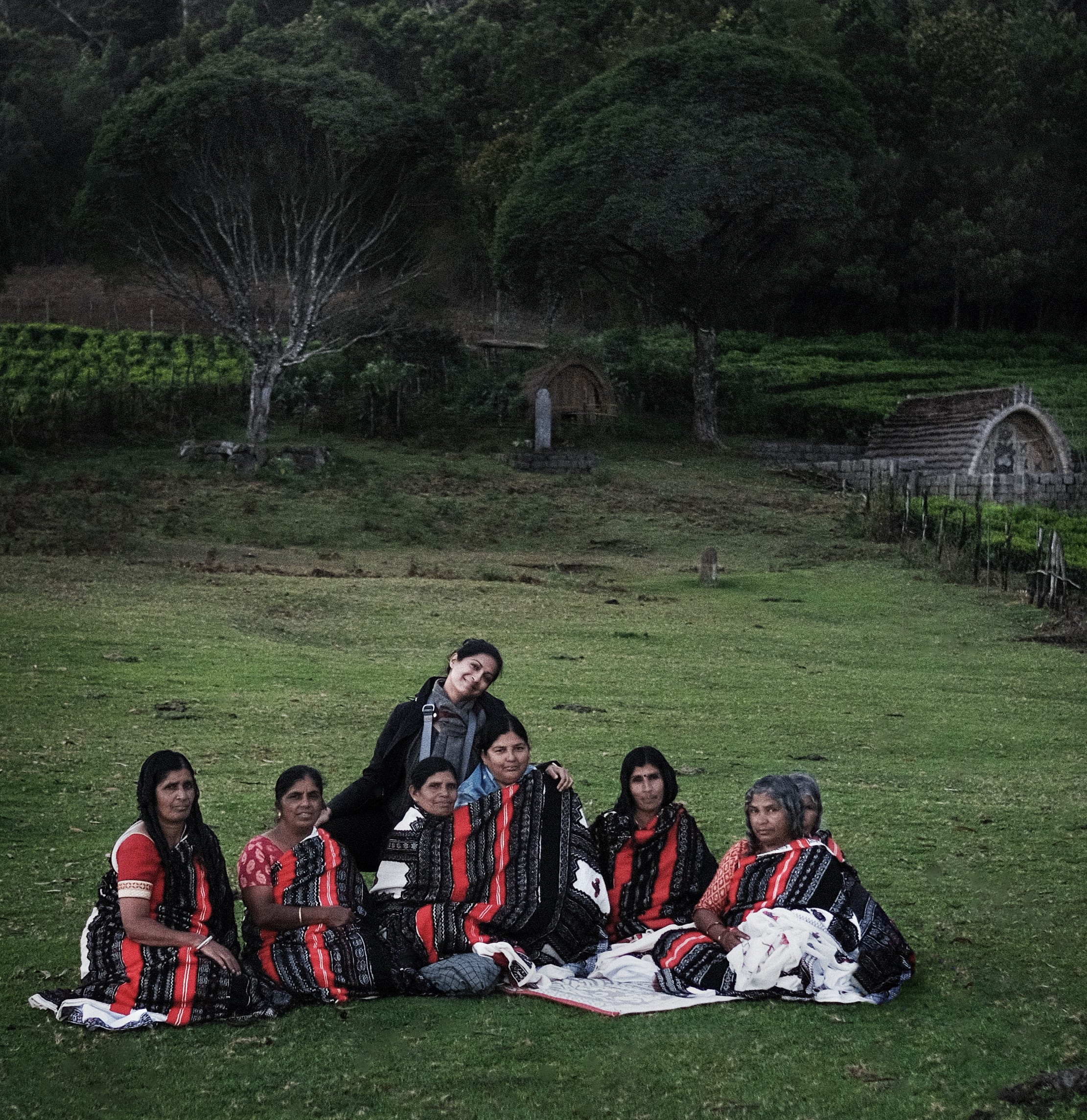
Coonoor & Co is a contemporary journal and design studio shaped by slow, sensorial, and considered living. The work draws from over a decade of engagement with the Nilgiri hills and their communities. The studio develops small-batch textiles and objects that honour indigenous knowledge while placing it in thoughtful contemporary dialogue. At the heart of this work is a long-standing engagement with the Toda women of the Nilgiris, custodians of an ancient geometric embroidery tradition passed through generations.